
Waiting is a normal part of many children’s party activities, particularly when guests are taking turns with face painting, games, performances or equipment. However, long or unpredictable queues can lead to boredom, arguments and anxiety.
The most effective solution is not simply to make children wait more patiently. It is to design the activity so fewer children are standing without anything to do. With a little planning, you can create a smoother party where guests know what is happening and have meaningful choices while they wait.
Start by identifying where queues are likely to form
Before the party, list every activity that involves one child at a time or a small number of children. Common examples include taking a turn at a game, having a balloon made, visiting a character or using a particular piece of equipment. Consider how long each turn will take and whether the activity can run continuously.
A queue becomes harder to manage when children cannot see how long they will be waiting. It is useful to separate activities into three groups: quick-turn activities, longer individual activities and group activities. This shows you where a second option or a change of format may be needed.
- Which activities can only serve one child at a time?
- Which activities can be offered to several children together?
- Will younger or neurodivergent children find standing in a line difficult?
- Is there a quiet place for anyone who needs a break?
- What can children do without waiting for an adult?
Offer two or more activities at the same time
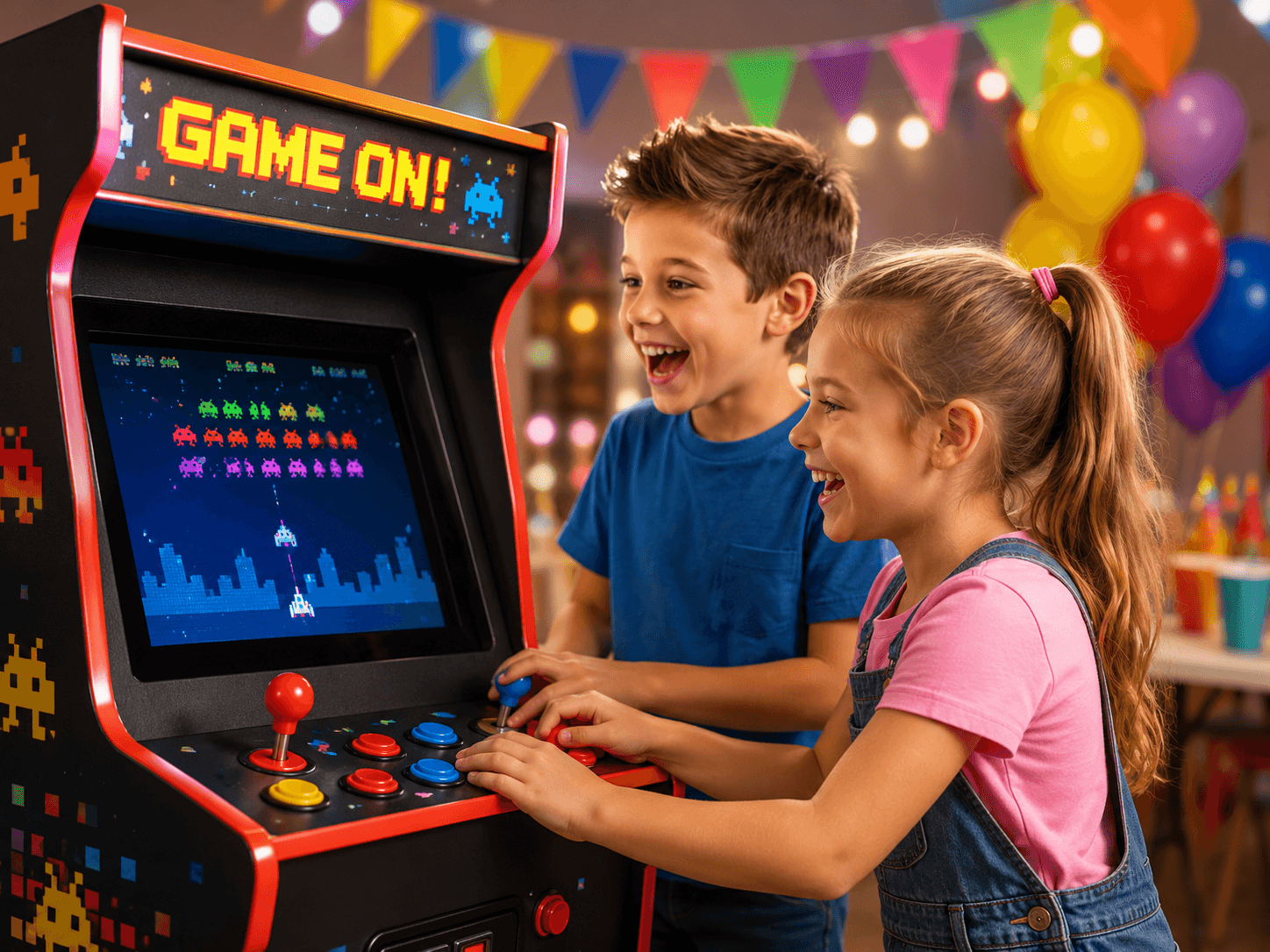
The simplest way to shorten a queue is to give children another worthwhile choice. For example, one small group could take part in a structured game while another group uses a self-directed activity. Children can then move between the options rather than gathering around one popular station.
The alternatives do not need to be elaborate. A selection of garden games can provide movement and variety alongside a more focused activity. Indoors, you might use drawing, building, a treasure hunt or a simple matching game, provided the space and materials are suitable for the guests.
Try to avoid presenting one activity as the main event and the others as fillers. Explain that each station is part of the party and give each one a clear purpose. Children are more likely to spread out when the alternatives feel intentional.
Use small groups instead of one large queue
A single line of children can make the wait feel longer than it is. Divide guests into small groups and rotate them through activities. This gives each child a defined place in the schedule without requiring everyone to stand together.
A simple rotation structure
For instance, divide the party into three groups using colours, animals or simple names. Give each group a starting activity, then signal a move after a set period. The children do not need to complete every activity perfectly; the aim is to provide a balanced flow rather than create another rigid timetable.
| Time | Activity |
|---|---|
| First activity | Each group starts at a different station, with an adult or helper explaining the rules. |
| Transition | Give a calm warning before moving groups, then direct each group to its next station. |
| Second activity | Keep the same structure and adjust the timing if a station is moving more slowly. |
| Final activity | Bring everyone together for a shared game or quieter ending. |
Timings are only an example — adjust them to suit your guests and venue.
Keep individual turns short and predictable
If an activity must be completed one child at a time, agree the format in advance. A clear time limit helps the adult running the activity and makes the process easier for children to understand. The limit should be realistic: rushing can create more confusion and make the activity less enjoyable.
Use a visible or audible signal to show when a turn is ending. A simple explanation such as “two more goes, then we change” is often easier to understand than an exact time. For younger children, demonstrate the turn before the queue begins.
Where possible, let children choose between two versions of the activity. They might select a short turn or a longer turn later, depending on the schedule. Choice can reduce the feeling that children are powerless while waiting.
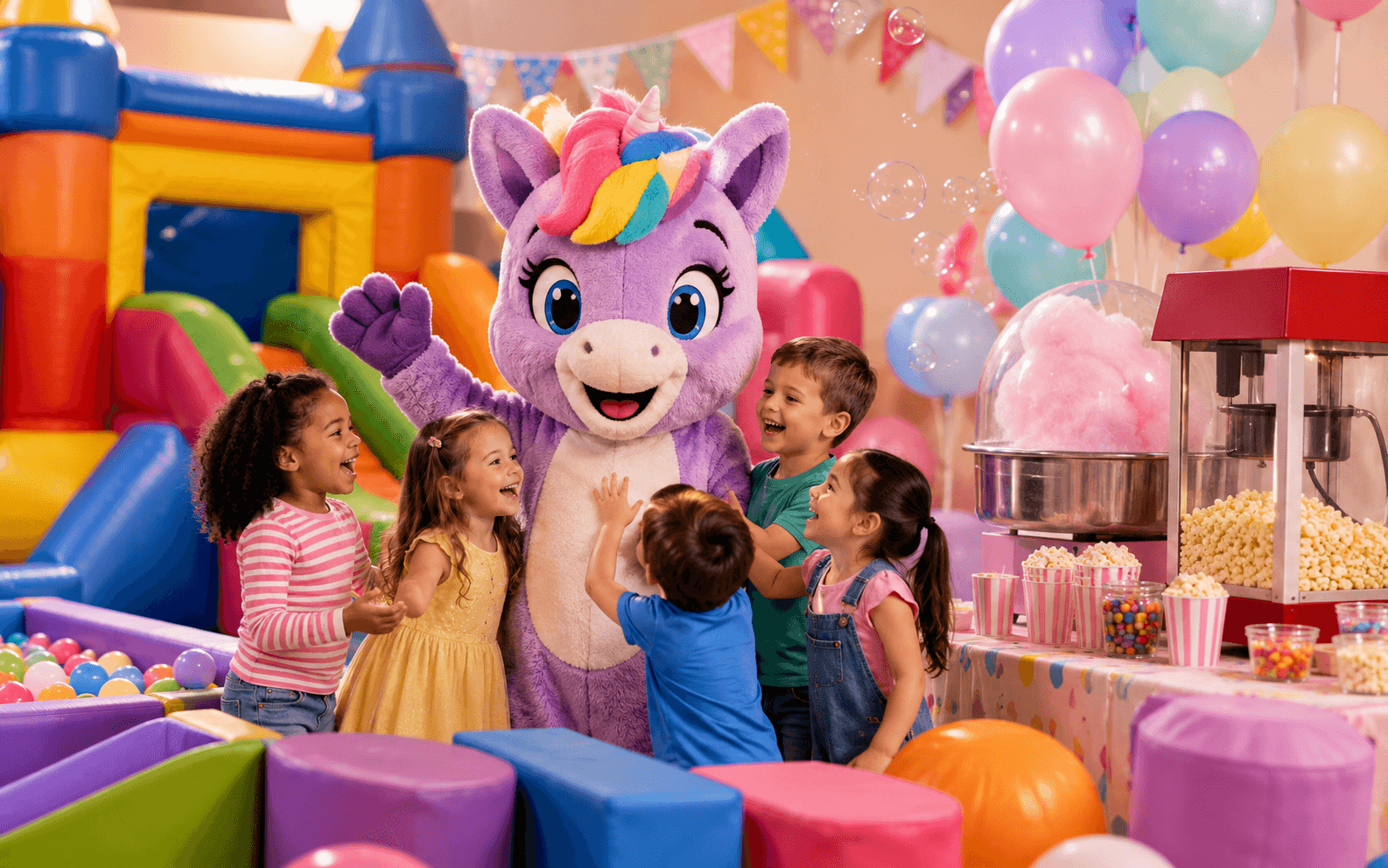
For activities involving a performer or entertainer, ask whether the format can include the whole group rather than relying mainly on individual turns. Inclusive and neurodiverse-friendly parties may use clearer transitions, flexible participation and alternatives for children who do not want to join a queue.
Give waiting children an active role
Children often cope better with waiting when they have something useful to do. This does not mean asking them to sit silently. Give them a role connected to the activity, such as choosing the next colour, collecting equipment, checking a picture card or helping to demonstrate a rule.
- A small challenge with several possible answers rather than one winner
- A drawing or colouring station near, but not directly inside, the main activity
- A hunt for objects or colours in the party space
- A movement prompt such as balancing, stretching or copying a pattern
- A quiet sensory option for children who need less stimulation
Avoid activities that create a second queue. For example, one shared tablet, one prize box or one adult-led craft can simply move the problem elsewhere. Choose options that several children can start and finish independently.
Make the queue easier to understand
Clear information reduces repeated questions and disagreements. Tell children where to wait, how turns are decided and what happens next. Use simple signs, picture cards or coloured markers if they are helpful for the age group.
A numbered system can work for some activities, but it is not suitable for every party. Some children may prefer to know that they are next, while others may find numbers or public announcements uncomfortable. Offer a quieter way to check, such as asking an adult or using a visual sequence.
Avoid promising an exact waiting time unless you can keep to it. Instead, describe the next step: “After this group, it will be your turn.” If the plan changes, explain why in calm, direct language rather than leaving children to guess.
Plan for children who do not want to queue
Not every child will want to join a busy line. Some may find close physical proximity, noise, uncertainty or public attention difficult. A genuinely inclusive plan allows children to participate without forcing them to use the same route as everyone else.
Consider a walk-up option, a later turn, a quieter version or the choice to watch. An adult can explain the activity privately and let the child decide when to join. This is particularly useful when an activity is exciting but visually or physically intense.
Make sure the alternative is treated as a valid choice, not a punishment or an afterthought. A quiet area with familiar activities can help a child regulate before returning to the main party. Parents and carers may also be able to suggest what usually works well for their child.
Use helpers carefully
A second adult can make a significant difference, but only if responsibilities are clear. One person might lead the main activity while another guides the next group, supports children who are waiting or resets equipment. Without defined roles, several adults may give different instructions and increase uncertainty.
Before guests arrive, agree on a few simple phrases and signals. Decide who answers questions, who manages transitions and who notices when a child needs a break. If you are using hired entertainment, explain the venue layout, guest ages and any important participation needs before the activity starts.
Planning tools such as the Smart Party Builder can help you organise activities, timings and space before the day. The tool is most useful when you use it to test the flow of the party, rather than filling every minute with another activity.
Review the layout before guests arrive
Physical layout has a direct effect on queueing. Keep the waiting area separate from entrances, food tables and active games where possible. Leave enough room for children to move past the queue without pushing through it.
Place signs and instructions where children can see them, and keep equipment for the next activity ready before the transition begins. If a station needs time to reset, send the group to a planned alternative instead of allowing everyone to gather around it.
For an outdoor party, check whether sunlight, uneven ground or weather changes could make a line uncomfortable. For an indoor party, look at noise levels and bottlenecks around doors or furniture. A short walk-through can reveal problems that are easy to miss on paper.
Keep the schedule flexible
A timetable should guide the party, not force every child through identical steps. If one activity is especially popular, allow another round later or move children to a suitable alternative. If interest drops, finish that activity and continue with the next one.
Build in a small amount of unassigned time so delays do not affect the whole event. Food, singing or a group story can provide a natural reset, but avoid using them only to conceal a poorly planned queue. The goal is a comfortable rhythm where children have regular chances to move, focus, talk and rest.
For further ideas on matching activities to the venue, see this guide to choosing a kids’ party venue. The available space, access points and quieter areas should all influence the way activities are arranged.
A smoother party starts with fewer idle moments
Reducing queueing during party activities is mainly about giving children clear choices, short predictable turns and something meaningful to do between activities. Small groups, parallel stations and flexible participation usually work better than one long line managed by repeated reminders.
Before the party, walk through the schedule as if you were a child arriving for the first time. Ask where you would wait, what you would do next and how you would know when your turn was coming. If those answers are clear, the party is more likely to feel calm, fair and enjoyable for everyone.