
Planning a toddler’s birthday party can feel different from organising a party for older children. Young children may enjoy an activity for only a few minutes, become overwhelmed by noise or need a quiet break without warning. The most successful celebrations usually offer a small number of simple activities rather than a packed programme.
For a first or second birthday, the best party entertainment for toddlers is often something they can explore at their own pace. Soft play, gentle visual effects and plenty of room for free play can create an enjoyable setting without putting pressure on children to perform or take part at a particular time.
What makes entertainment suitable for toddlers?
Toddlers are still developing their balance, coordination, communication and confidence. Entertainment should therefore be easy to understand and flexible enough for children to join in briefly, watch from a distance or return to later. Activities with a clear beginning and end can be less important than a welcoming environment that children can explore safely.
It is also worth considering the adults attending. Parents and carers will need to supervise young children, help them share equipment and respond to tiredness or changing moods. A good toddler party plan leaves space for conversation, snacks and nappy changes rather than filling every minute.
- Can children take part without needing complicated instructions?
- Is there room for children to move around without crowding one another?
- Can a child stop and leave the activity easily?
- Will the entertainment suit children with different confidence and mobility levels?
- Is there a quieter area nearby for a child who needs a break?
1. Soft play for active, independent play
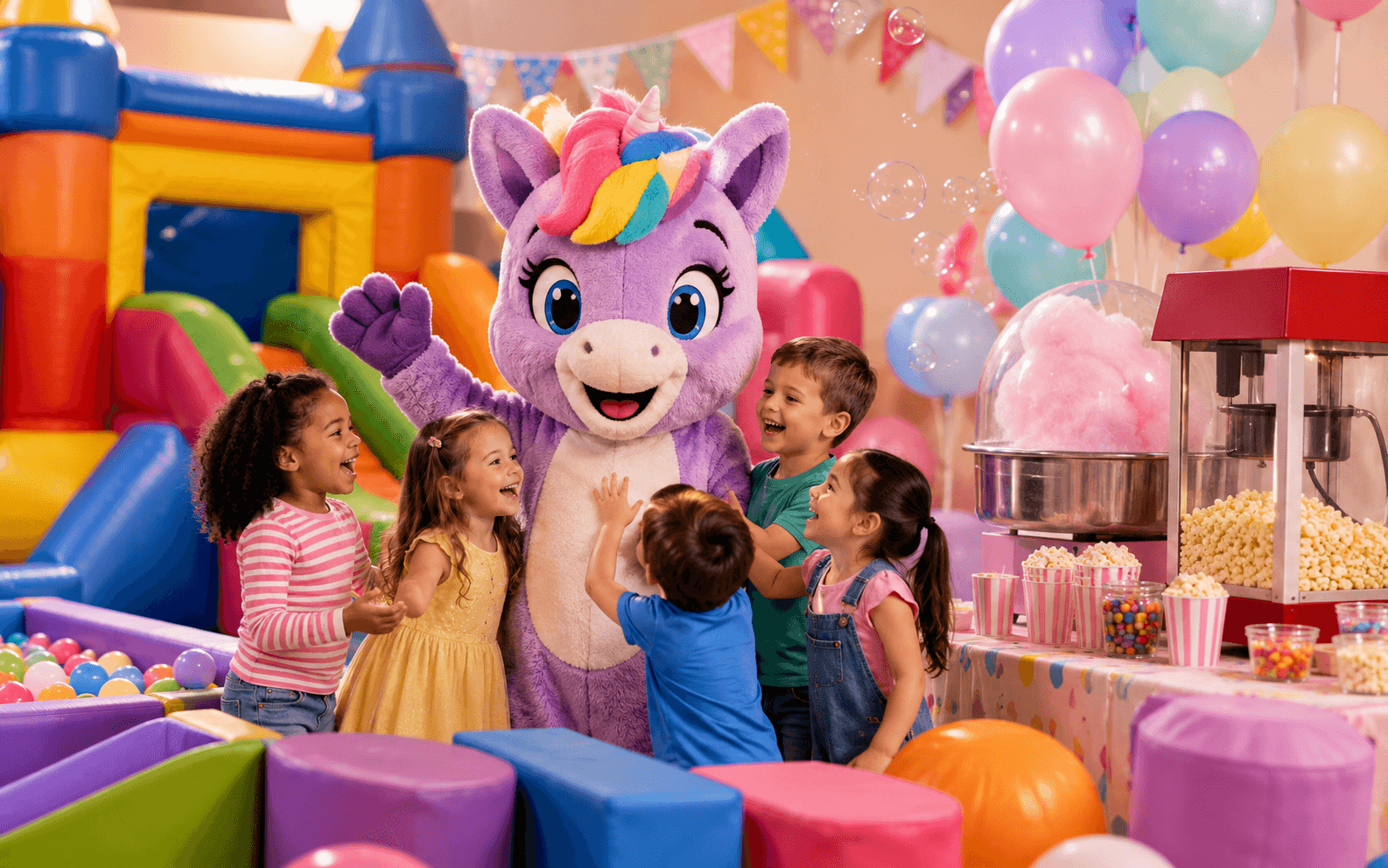
Soft Play Hire is a natural fit for many toddler celebrations because it gives children something physical to explore without requiring them to follow a game or compete. Crawling, climbing, stepping and balancing can all become part of the play, with children choosing what they feel ready to try.
Soft play can work particularly well for a first birthday where guests may include babies, toddlers and older siblings. Children can move between the equipment, toys and nearby adults instead of being expected to stay in one organised activity. This makes it easier to adapt the pace as the party develops.
How to make soft play work well
- Leave a clear route around the play area so adults can supervise and children can move in and out.
- Keep food, drinks and small loose items away from the equipment.
- Invite children to take turns without turning the activity into a formal competition.
- Plan a quieter space nearby with seating for children who need time away from the action.
- Check the space before the party so the equipment does not block entrances, exits or serving areas.
2. Gentle party effects for a memorable moment
Toddlers often respond well to visual experiences that are brief and easy to observe. Party Effects can add a special moment to a celebration, particularly around the birthday song, cake or a group photograph. The aim should be to create atmosphere without making the room too loud or startling young guests.
Think about timing carefully. A short effect when most guests are seated can be easier to manage than introducing something unexpected while children are already running around. Tell parents and carers what is about to happen, and allow children to watch from a comfortable distance if they do not want to be close to it.
Keep sensory needs in mind
Children vary considerably in how they respond to sound, light, movement and crowds. Avoid assuming that every toddler will want to join the most exciting part of the party. A calm explanation, a visible adult and a nearby quiet area can make the experience more comfortable for everyone.
3. A simple free-play party structure
For toddlers, entertainment does not need to involve a succession of performers or organised games. A straightforward structure gives children time to settle in, explore and rest. It also gives adults a useful rhythm to follow without making the party feel rushed.
| Time | Activity |
|---|---|
| Arrival | Welcome families, show them where coats and bags can go, and let children settle into free play. |
| Early play | Give toddlers time to explore the main activity at their own pace while adults supervise and chat. |
| Snack break | Offer food and drinks, allowing children to pause and adults to help them as needed. |
| Birthday moment | Bring the group together briefly for the birthday song, cake or a gentle party effect. |
| Final play | Leave time for children to return to their favourite activity before families head home. |
Timings are only an example — adjust them to suit your guests and venue.
This structure is flexible rather than a timetable that must be followed exactly. If children are deeply engaged in play, there may be no need to interrupt them for a planned game. If the group becomes tired or unsettled, moving to food or a quieter activity may be the better choice.
4. Plan around the children, not the equipment
Entertainment is only one part of a toddler party. The room layout, guest list and length of the celebration can have just as much effect on how comfortable children feel. For a first or second birthday, inviting a manageable number of young guests may make supervision and sharing easier.
Set up the main activity before guests arrive where possible, so children can begin playing instead of waiting. Keep refreshments in a separate area and make sure adults can see the play space from where they are sitting. If the party is at home, move fragile ornaments and small objects out of reach before setting up.
- The available floor area and ceiling height.
- Clear access for children, adults and any equipment being brought into the room.
- A suitable place for shoes, coats, pushchairs and changing bags.
- Enough seating for parents and carers to supervise comfortably.
- A calm area where children can sit with a familiar adult.
- Whether the party space can be cleaned easily after food and play.
5. Ideas for first and second birthdays
A first birthday often works best as a relaxed family gathering with a small amount of age-appropriate play. Babies may spend much of the event with their parents, while older toddlers explore nearby. Soft play can provide an activity for mobile guests without making the birthday child the centre of constant attention.
For a second birthday, children may be ready for more independent exploration, but their attention span will still vary. You could create two or three play zones, such as soft play, a space for toys and a seating area for snacks. Gentle party effects can then mark the birthday moment without taking over the celebration.
If older siblings are attending, consider how they will stay occupied without making the toddler area too busy. A separate activity zone can help different ages enjoy the party while keeping the main space comfortable for younger children.
Choosing the right combination
For most toddler parties, one main activity is enough. Soft play can provide the core entertainment, while a carefully timed party effect adds a memorable moment. This combination keeps the plan varied without asking young children to move repeatedly between activities.
If you are unsure what suits your venue or guest list, start with the practical information: the children’s ages, the number of guests, the available indoor or outdoor space and any sensory considerations. You can then compare options through the Children's Parties service information and build a plan around the children who will actually attend.
For broader planning guidance, How to Plan a Kids' Birthday Party Without the Stress can help you work through the guest list, schedule and practical arrangements before choosing entertainment.
A calmer way to plan toddler entertainment
The best toddler party entertainment is engaging but not demanding. Choose activities that children can explore freely, allow time for snacks and rest, and keep any special effects brief and predictable. Soft play provides a flexible foundation, while gentle party effects can give the birthday moment a little extra atmosphere.
Most importantly, plan for real toddler behaviour rather than an ideal schedule. Children may change their minds, need their parents or prefer to watch instead of joining in. A flexible party with clear spaces, simple entertainment and supportive adults is likely to feel more enjoyable for everyone.